The ice was purchased from the ice vendor.
It was possible to buy a whole block, half a block, or even a third.
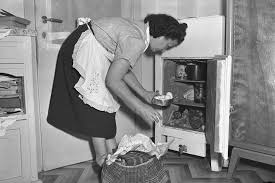
The icebox had three compartments: a top compartment for placing the ice blocks, a middle compartment for storing food, and a bottom compartment for collecting the melted ice water.
The ice was purchased from the ice vendor.
It was possible to buy a whole block, half a block, or even a third.
The icebox had three compartments: a top compartment for placing the ice blocks, a middle compartment for storing food, and a bottom compartment for collecting the melted ice water.
The ice vendor would use an awl to make two notches on the sides of the block so he could grip it with the tongs and hand it over to the customer.
A carrying handle for the ice, to take it home, was something only well-off families could afford.
Most families would bring a jute sack or a towel to carry the cold, heavy, and painful ice block.
During the holidays, people had to purchase coupons in advance and go to the fishmonger, who stored the ice blocks for the entire duration of the holiday.
In Tel Mond, the position of the ice vendor (as well as other roles such as newspaper, bread, and milk delivery) was highly coveted — and in every town, there was one lucky person who held it!